Guide 03, care
Ten Years of Pile: Living With a Shag Rug
Deep pile is bought for how it feels and kept for how it is cleaned. What a vacuum does to a 1.77-inch pile at the wrong setting, how often a shag rug wants a shake against how often it wants a wash, what a washing machine does to backing dots, why matted pile is nearly always a drying problem, and the routine that keeps a rug looking new for a decade.
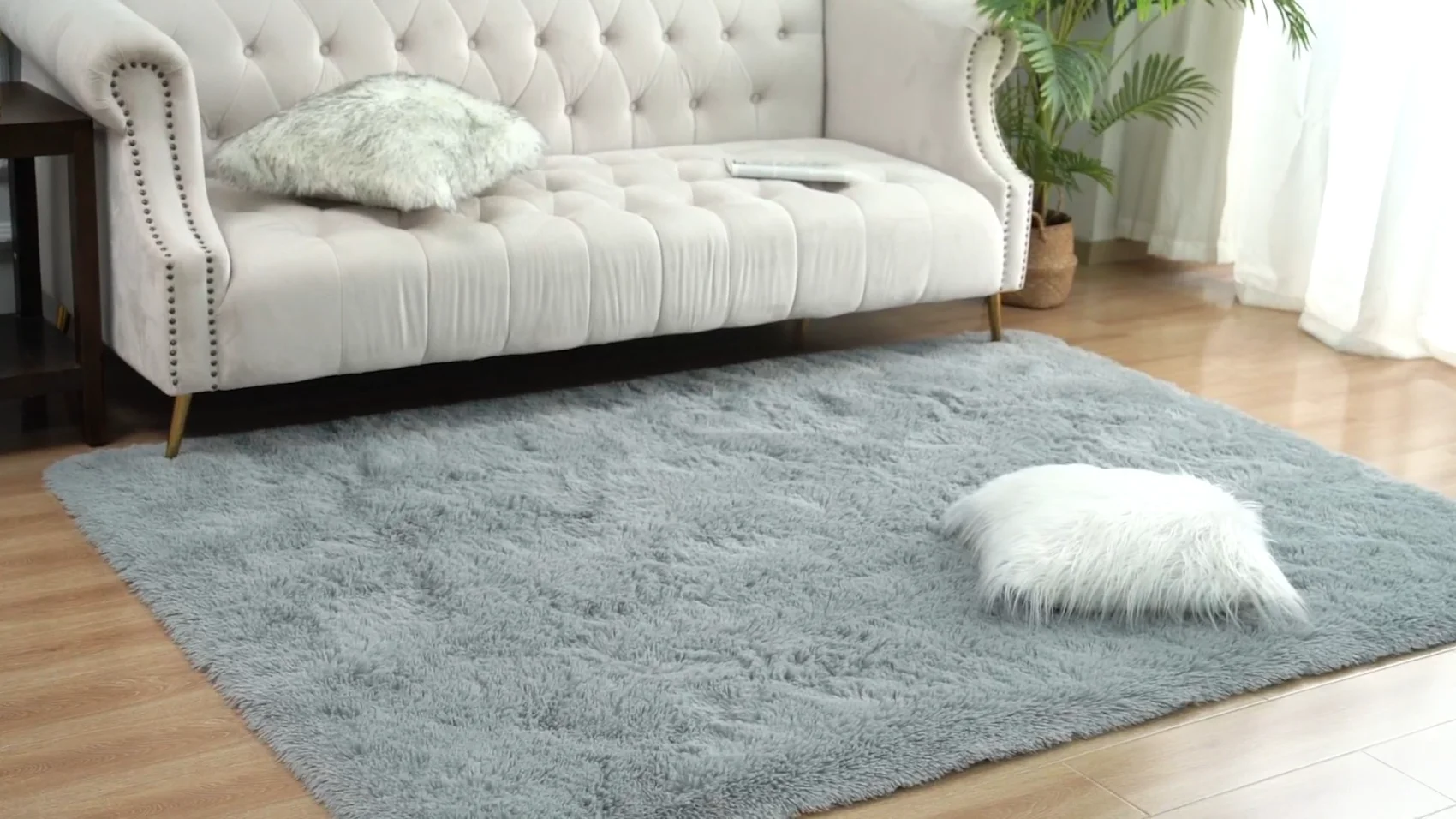
A deep pile rug changes a room. It swallows sound, warms a cold floor, and invites people to sit right down on it. Our shag and fluffy area rugs run up to an inch and three quarters of microfiber pile, soft enough that a child will sprawl out for a movie and a dog will pick that spot over the sofa. But a piece this plush asks for a different kind of care than a flatwoven runner or a low loop pile. Keep it the right way and it stays soft and bright for a decade. The wrong way and you can flatten it in under a year. What follows is the whole span of living with deep pile, from the first week out of the box to the habits that keep it looking new at year ten.
What deep pile is, and what it is not
Deep pile means a rug whose fibers stand tall enough that you can sink your fingers into them. On our shaggiest rugs, that height reaches 1.77 inches. The pile is microfiber, built in dense tufts that catch light and feel warm under bare skin. Some of our lines add a memory foam interlayer between the pile and the backing, which makes the floor softer still. Underneath it all are thousands of small rubber grip dots, not a solid sheet, so the backing flexes and holds its place without trapping moisture against the floor.
That warmth and softness make deep pile a rug for living at ground level. It belongs in a bedroom where your feet land first thing in the morning, in a living room where people stretch out on the floor, or in a play area where kids lie on their stomachs with a book. It is quiet. It insulates. It makes a hard floor feel like a different surface altogether.
It is not a rug for a dining chair. Chair legs sink, the pile catches, and the constant push and pull mats the fibers faster than anything else. Spills are part of eating, and while spot cleaning can handle the occasional coffee drip, a rug under a table gets hit too often to stay clean. It is also not the right piece for a wet room. For a bathroom floor that dries fast, we make a different kind of textile, covered in the bathroom floor that dries. And while it can work in a hallway if the traffic is light, a deep pile rug will flatten more quickly in a main path than it would in a quieter corner. Getting the size right matters too, and there is a full guide on sizing a rug room by room.
The first month
When you unroll a new deep pile rug, two things happen. First, the pile lies flat in the direction it was rolled. Second, a small amount of loose fiber works its way to the surface. Both are normal.
The loose fibers are short ends left from the manufacturing trim. They will shed for a few weeks and then stop. Help them along by vacuuming lightly with suction only, no beater bar, or by shaking a small rug outside. Do not pull at the loose threads. They will release on their own.
To lift the pile after unrolling, run your hands backward against the direction it lies. A few passes and the fibers stand up. Over the next week or two, the rug will settle into its full height as people walk on it and vacuuming pulls the tufts open. This is the rug relaxing, not wearing down.
Vacuuming with care
The single most damaging thing you can do to a deep pile rug is run a beater bar over it.
Never run a beater bar over a deep pile rug. The rotating brush pulls at the long fibers and can tear the backing over a single season of use.
A beater bar is the spinning brush on the bottom of an upright vacuum. On a short loop pile it flicks dirt out. On a shag rug it wraps the long strands around itself, yanks the tufts, and can fray the backing where the fibers are anchored. Once that backing is damaged, the rug cannot hold its pile steady.
Set your vacuum to a hard floor or suction only setting. If your machine has no switch for the brush roll, use an upholstery or crevice attachment without a rotating head. Keep the suction on low so the fibers lift but do not get pulled up into the nozzle. Move the vacuum head across the pile, not along it. Going with the pile presses the fibers flat. Going across them stands them up and lets the air reach the backing.
How often you vacuum depends on your household. In a home with no pets and low traffic, once a week is enough. With a dog or with children who eat snacks on the floor, go twice a week. The goal is to get loose dust and grit off the surface before it works down to the base. Grit at the root of the pile acts like sandpaper, shortening the fibers from underneath while the top still looks fine.
For our faux fur and sheepskin pieces, the tool is a wide-toothed comb, not a vacuum. The long faux fur pile is too fine to handle suction without matting. Combing lifts the pile and pulls out loose hair and dust without stressing the suede backing.
Shaking, beating, and spot cleaning
A small rug, up to about 5 by 7 feet, still benefits from the oldest kind of cleaning. Take it outside, grab two corners, and give it a hard shake. A few good snaps and the grit that settled deep flies out. For a more thorough clean, hang it over a rail or a sturdy line and beat it with a rug beater or a broom handle. You will see a cloud of dust even right after a vacuuming. That is the fine grit that suction alone cannot pull from the base.
Spills need attention before they reach the backing. The rule is simple.
Blot, never rub. Working from the outside inward keeps a spill small. Cool water and a mild detergent lift most stains without setting them.
Press a clean white cloth into the spill to soak up liquid. Do not scrub. Rubbing pushes the stain sideways into the surrounding pile and can drive it deeper. Once you have blotted up as much as possible, work a small amount of cool water mixed with a mild detergent into the spot, again blotting outward. Rinse by blotting with a damp cloth of plain cool water. Then lay a dry towel over the area and step on it, or place something heavy on top, to pull the remaining moisture out. Leave the rug to dry fully before anyone walks on it. A damp pile is fragile and stays compressed underfoot.
Washing a deep pile rug
A deep pile rug needs a full wash eventually. Whether you can do it at home comes down to size. Most household machines can handle a rug up to about 5 by 7 feet. Larger rugs need hand washing in a bathtub or a professional with experience in soft textiles.
Set the machine to a gentle cycle with cold or warm water. Hot water is the enemy. The rubber grip dots and the memory foam layer start to break down at high temperatures. Use a mild liquid detergent and skip the fabric softener entirely. Softener coats the microfibers and flattens the pile over time.
Drying is where many rugs meet a premature end. Never hang a wet deep pile rug over a rail or a line. The weight of the waterlogged pile pulls the backing out of shape and can cause the fibers to lean permanently.
Heat is what shortens a rug's life. The rubber grip dots and the memory foam layer cannot take a hot wash or a high heat dryer cycle. Always wash cold or warm and dry flat.
Lay a clean sheet on a hard floor, place the rug flat on top, and turn it over after a few hours. A fan pointed across it speeds the process. In warm weather, outdoor drying in the shade works well, but keep it out of direct sun because wet color is more vulnerable to fading. Do not walk on it or put furniture back until the pile is bone dry. A rug that feels dry on the surface can still hold moisture at the base, and that leads to matting and, in the worst case, mold.
The table below lines up the care tasks with a sensible rhythm. Adjust for a busier or quieter home.
| Task | How often | Why | Applies to |
|---|---|---|---|
| Vacuum (suction only) | Once or twice a week | Removes surface dust and grit before it embeds | All sizes |
| Shake or beat | Once a month for small rugs | Gets fine grit out that vacuuming misses | Rugs up to about 5 × 7 ft |
| Rotate | Every three to six months | Evens out wear and sun fading | All sizes |
| Spot clean | As soon as a spill happens | Prevents stains from setting into the backing | All sizes |
| Full wash | Every six to twelve months, or when soiled | Removes oils, deep dirt, and allergens that build up in the pile | Small to medium rugs, large ones need hand washing |
Different types of LOCHAS pile have slightly different cleaning needs. Use this second table to check what your specific rug can handle.
| Pile type | Vacuum setting | Machine wash | Drying |
|---|---|---|---|
| Deep shag | Suction only, low setting, no beater bar | Cold or warm, gentle cycle | Dry flat, no heat |
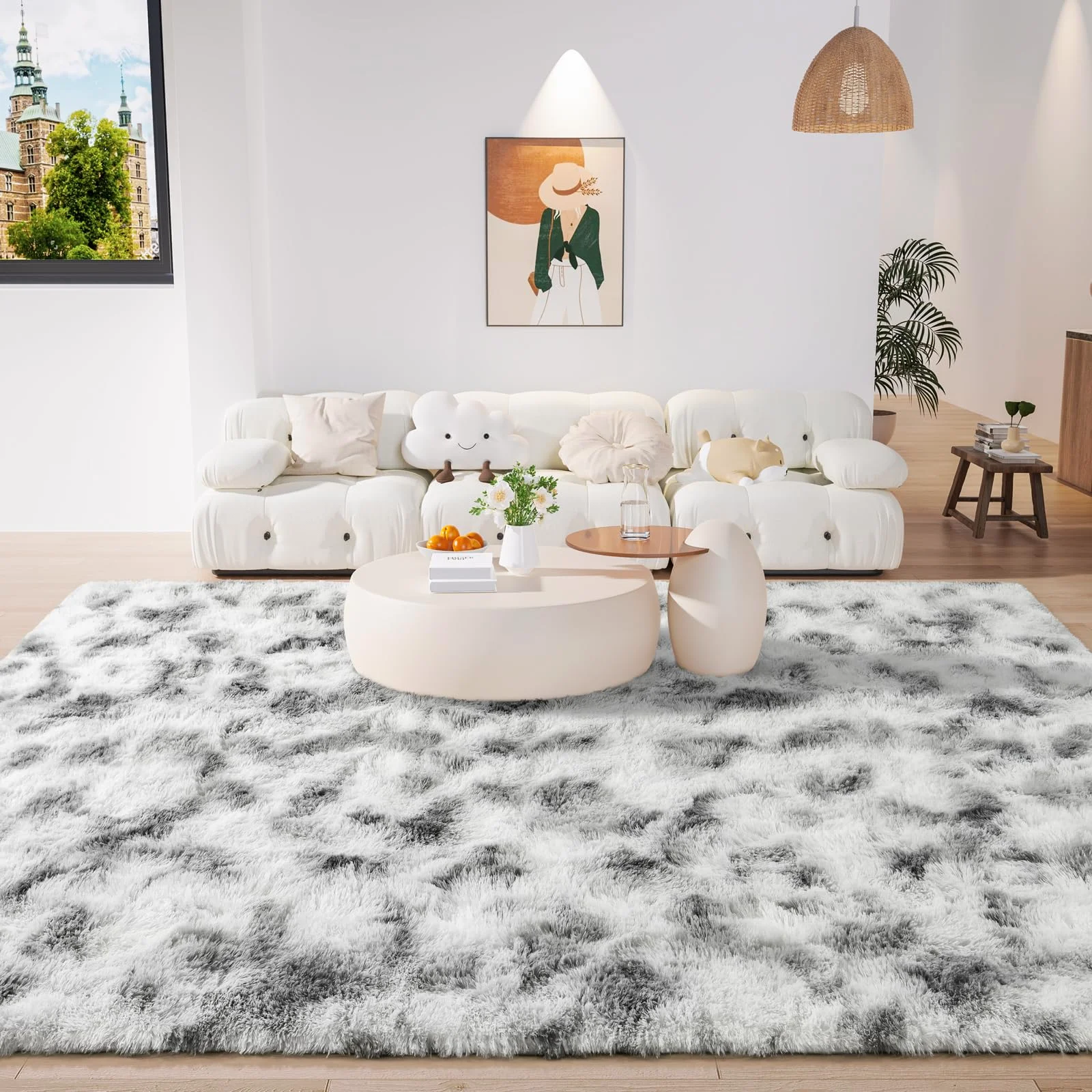
| Tie-dyed shag | Suction only, low setting, no beater bar | Cold or warm, gentle cycle | Dry flat, no heat |
| Faux fur | Do not vacuum, comb with a wide-tooth comb | Cold, delicate cycle, or hand wash | Dry flat away from heat |
| Low pile (0.2 inch) | Suction or low beater bar | Warm, gentle cycle | Dry flat, or tumble dry on low if pile is low |
| Chenille bath pile | Suction only, no beater bar | Warm, gentle cycle | Tumble dry on low, or dry flat |
Faux fur and sheepskin rugs are never vacuumed. The pile is too fine and too long. A wide-toothed comb, used lightly and in the direction of the hair, keeps it from tangling and pulls out loose dirt without breaking the strands.
Matted pile and how to bring it back
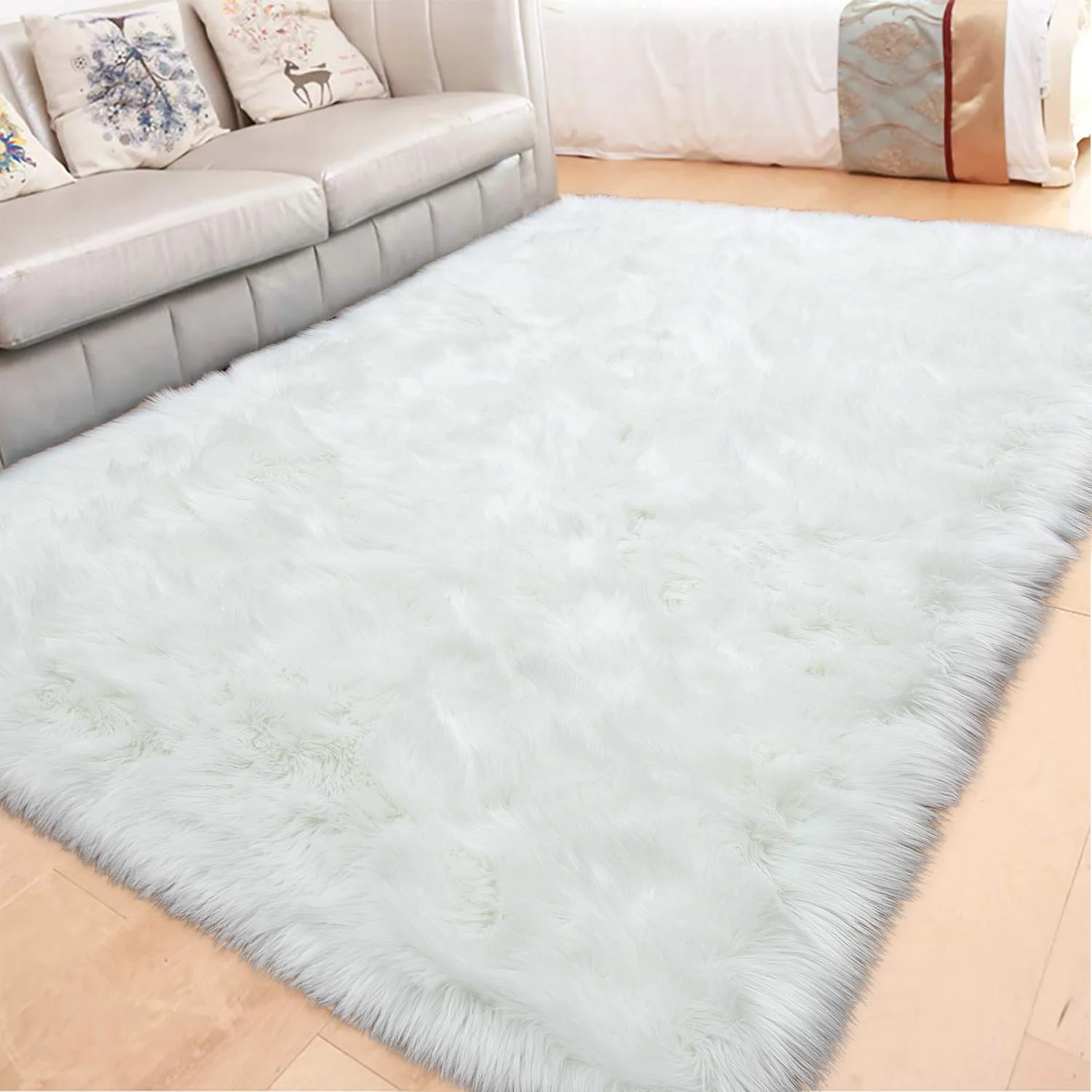
Matted pile can look as though the rug is worn out, but in most cases the fibers are simply stuck together and lying flat. The usual causes are heavy weight left in one place for too long, or a rug that was dried lying down without being fluffed afterward.
Fixing matting is straightforward. Dampen the flattened area with a spray of cool water. Use your fingers or a wide-tooth comb to work through the pile, lifting the fibers upward. You can also use the edge of a credit card to separate the tufts. Once the pile stands up again, let it dry completely without anyone stepping on it. A fan helps. When it is dry, the fibers will hold their shape. If matting happens repeatedly in the same spot, it may be that the spot takes too much traffic for a deep pile rug. A rotation or a small furniture shift often solves it.
Allergens, honestly
The Asthma and Allergy Foundation of America names wall-to-wall carpet and soft furniture among the main indoor sources of allergens. Dust mites, pet dander, and pollen settle into the fibers. AAFA advises vacuuming once or twice a week with a vacuum that does not blow dust back into the air, and it recommends washing bedding and soft items in water at 130 degrees Fahrenheit or hotter each week to kill dust mites.
We have to be straight about the tension here. A deep pile rug made of microfiber with a rubber backing cannot be washed at 130 degrees. That heat would degrade the dots and the memory foam, shortening the rug's life to a season or two. For a household where allergy management is the first priority, the answer is not to wash a large shag rug in hot water. The answer is a smaller rug that fits in the machine, washed regularly in cold or warm water with a deep rinse, and dried flat in full sun or near an air purifier. A rug you can lift and wash gets cleaner than installed carpet that can never be laundered. That is the part of the trade that a loose-lay rug offers. A piece like one from our rainbow kids rugs collection is perfectly sized for this kind of frequent cleaning and can go back on the floor the same day.
Damp, and what the EPA tells us
The EPA says it plainly. Dry items completely. Absorbent and porous materials, once mold takes hold, may have to be thrown away because the mold grows into the crevices and cannot be fully removed. That applies to any soft rug, including ours.
Places where damp gets in are basements with concrete floors that sweat in summer, a spot under a window that leaks during a storm, or a rug placed on a floor that was still drying from a mop. A rug pad that breathes is a layer of insurance. It lifts the backing off the floor and lets air move, which does a lot to prevent moisture buildup. In a basement, check the rug after heavy rain or a humid spell. If the backing feels cold and clammy, lift the rug, air it, and run a dehumidifier. Under a window, treat the window first. The rug will only trap the moisture and eventually smell of mildew.
If a rug does get soaked, speed matters. Lift it, blot the floor dry, and spread the rug flat in a dry room with fans moving air across both sides. If mildew appears as a dark spotting deep in the pile, the EPA's warning holds: it can be very hard to get mold out of thick, porous material. Prevention keeps you from having to throw a rug away.
Furniture dents, sun, and the direction of the pile
Heavy furniture leaves its mark on deep pile. A sofa leg that sat in one place for six months compresses the fibers into a dent. It is not permanent. Place a few ice cubes on the dent and let them melt. The water soaks into the compressed fibers. Once they are damp, use a comb or your fingers to lift the pile back up, and let it dry. The dent will come out as the pile recovers.
Sunlight is a slower force. Over two or three years, the side of the rug nearest a window can fade noticeably. Rotating the rug every three to six months keeps the color change even across the whole surface. Our washable low pile rugs are a good alternative for rooms that get strong all-day sun, because the printed pattern wears fading differently than a solid dyed shag.
The direction of the pile also changes how the rug looks. Run your hand one way and the color appears darker and richer. Run it the other way and it looks lighter. This is a feature of all cut pile rugs, not a flaw. When you vacuum, go against the pile once at the end to lift it and set the shade you want. A rug walked on every day will slowly lean in the direction of traffic, so lifting the pile back with a quick hand brush or reverse vacuum pass keeps it looking full.
Ten years
A deep pile rug can last ten years and more if it avoids the two things that truly kill one.
The first is grit left to sit. Sand and tiny sharp particles settle down past the pile tips and lie against the backing. Every step grinds those particles across the fibers at the base, slowly cutting them. A rug can look full on top and be thin underneath. Regular vacuuming and shaking are what stop that.
The second habit is aggressive cleaning. A rug that is power washed once a year with a strong machine, or run through a hot dryer, or hung dripping wet over a line, loses its shape and its grip faster than one that is cleaned gently and more often. The rubber backing dots stay intact. The memory foam keeps its bounce. The pile fibers stay upright.
A deep pile rug that gets suction-only vacuuming every week, an occasional shake or spot clean, and a careful wash when it truly needs one will still feel soft underfoot years into its life. The color might mellow a little, and the pile will settle, but it should not mat down or come apart. Our LOCHAS shag rugs are built with this kind of durability in mind, from the stitched edges that prevent shedding at the border to the dense rubber dots that hold the backing together as the years pass.
Public guidance on flammability, falls and damp is quoted here as the agencies publish it. None of it is medical, legal or professional advice, and where an agency says something different from a sentence above, the agency is right.
